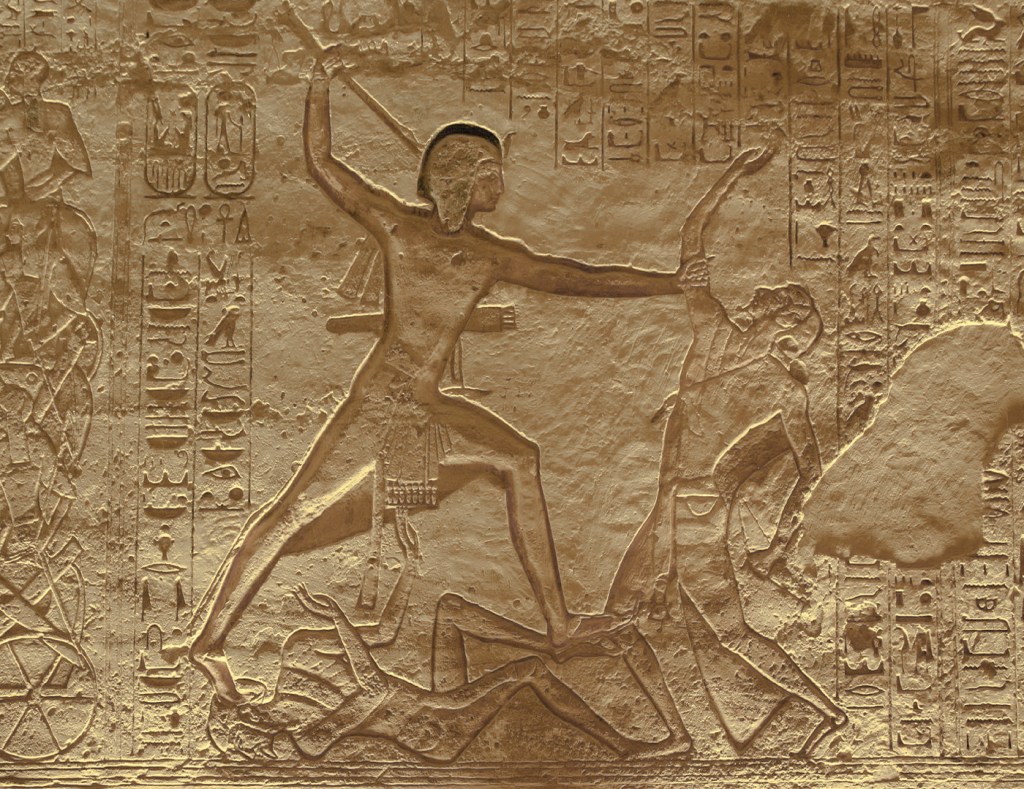
Kadesh: The First Peace Treaty in History
Introduction
The Battle of Kadesh, fought in May 1274 BCE, stands as one of the earliest recorded battles in history where details of tactics and formations are known. This confrontation between the Egyptian Empire under Pharaoh Ramesses II and the Hittite Empire led by King Muwatalli II took place near the Orontes River, close to the modern Lebanon-Syria border. The subsequent Treaty of Kadesh signed approximately fifteen years later, marks the oldest surviving international peace treaty, illustrating early diplomatic practices that have influenced the course of history.
Historical Context
By the 13th century BCE, both Egypt and the Hittites had established themselves as dominant powers in the Near East. The Egyptian New Kingdom, following the expulsion of the Hyksos around 1550 BCE, had adopted an aggressive stance in securing and expanding its borders. Pharaohs Thutmose I, Thutmose III, and Amenhotep II led campaigns extending Egyptian influence from Megiddo to the Orontes River. However, during the later Eighteenth Dynasty, Egypt’s control in the region waned, with the Mitanni and later the Hittites exerting influence over northern Syria.
The reign of Horemheb, the last ruler of the Eighteenth Dynasty, marked a renewal of Egyptian interest in reclaiming lost territories. His successor, Ramesses I, and his son Seti I, continued this military policy, restoring Egyptian dominance in parts of Canaan and Syria. Seti I’s campaigns into Canaan and ancient Syria reestablished Egyptian posts and garrisoned cities, setting the stage for future conflicts with the Hittites.
The Battle of Kadesh
The immediate antecedents of the Battle of Kadesh were Ramesses II’s early campaigns in Canaan. In the fourth year of his reign, Ramesses marched north into Syria, to recapture Amurru or to assess the loyalty of his vassals. In the spring of his fifth regnal year, Ramesses launched a major campaign from his capital, Pi-Ramesses, towards Kadesh, leading an army of four divisions: Amun, Re, Set, and Ptah.
Muwatalli II, aiming to regain control over Amurru, mobilized his allies, including the king of Aleppo. The Hittite army, strategically positioned behind “Old Kadesh,” awaited the Egyptians. Ramesses, misled by false intelligence from Hittite spies, believed the Hittite forces were far to the north, prompting him to set up camp near Kadesh with inadequate preparation.
As the Egyptians approached Kadesh, they encountered the Hittite chariot force, which ambushed the Re division and penetrated the Egyptian camp. Ramesses, finding himself isolated with only the Amun division, personally led a counterattack. Despite initial setbacks, Ramesses’ leadership turned the tide, as his forces, including reinforcements from the Ne’arin contingent and the Ptah division, repelled the Hittite chariots.
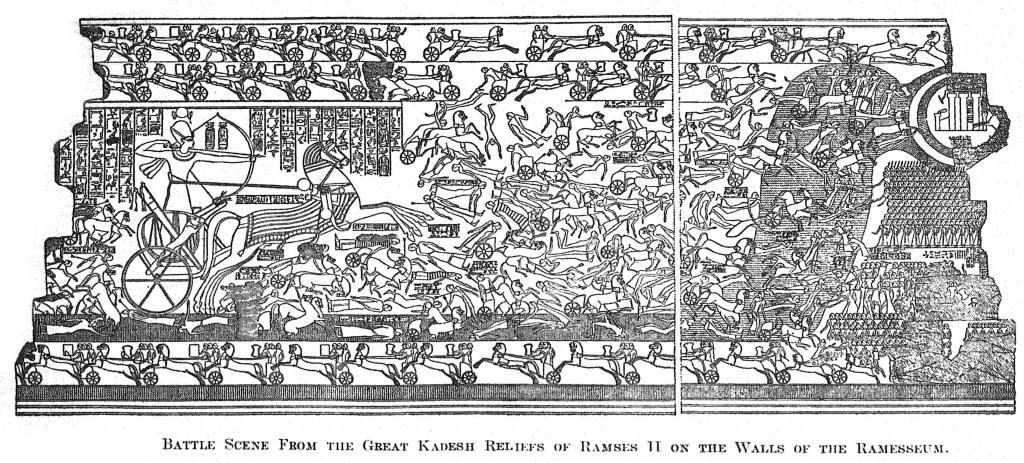
Outcome and Aftermath
The battle’s outcome remains a subject of debate among historians. Egyptian records depict it as a triumph for Ramesses, celebrating his personal valor and military acumen. However, the practical results were inconclusive; the Egyptians failed to capture Kadesh, and both sides claimed victory. Modern scholarship often views the battle as a strategic draw, with neither side achieving decisive dominance.
Following the battle, Egypt and Hatti continued to vie for control in the region. Ramesses conducted further campaigns to solidify Egyptian influence in Canaan and Syria, capturing cities like Dapur and Tunip. Despite these efforts, lasting control over these territories proved elusive, leading to continued hostilities.
The Treaty of Kadesh
Fifteen years after the battle, in the 21st year of Ramesses II’s reign (1258 BCE), a formal peace treaty was concluded between Egypt and Hatti. This treaty, inscribed on a silver tablet, is the earliest known example of an international peace agreement. The treaty’s terms emphasized mutual non-aggression and cooperation, reflecting advanced diplomatic principles for the time.
The Kadesh Peace Treaty is notable for several reasons:
- The Oldest Known International Treaty: The Kadesh Peace Treaty is the earliest surviving international agreement. It is the oldest documented instance of a formalized peace treaty between two great powers, setting a precedent for future diplomatic engagements.
- Template for Future Treaties: The structure and content of the Kadesh Treaty established a formal template that would influence subsequent treaties. Its provisions, stipulations, and diplomatic language became a model for later agreements.
- State and Ruler Identity Philosophy: The treaty underscored the connection between the state and its ruler, a principle that became a cornerstone in subsequent international diplomacy. Agreements were henceforth often made in the name of the reigning monarch, symbolizing the unity and authority of the state.
- Non-Aggression and Mutual Aid Clauses: Beyond merely ending hostilities, the treaty included specific clauses for non-aggression and mutual assistance. This innovative approach to peace and cooperation laid the groundwork for more complex diplomatic relations.
Diplomatic Relations and the Treaty’s Aftermath
The diplomatic relationship between Egypt and the Hittites flourished following the treaty. A notable illustration of this improved relationship was the marriage alliance between the two royal families. After the death of an Egyptian queen, Pharaoh Ramses II married a Hittite princess, further solidifying the bond between the two states. This union was celebrated with a grand ceremony at the border, attended by dignitaries and soldiers from both nations, symbolizing the newfound amity and cooperation.
Preservation and Legacy
The Kadesh Peace Treaty was recorded in both Egyptian and Hittite versions. The Egyptian text, inscribed in hieroglyphs, was prominently displayed on the walls of the Karnak Temple. The Akkadian version, written on clay tablets, was discovered during the excavations at Hattusa, the Hittite capital, and is now exhibited in the Istanbul Archaeological Museum.
This treaty not only holds a significant place in the annals of Hittite and Egyptian history but also marks a pivotal moment in the broader context of international relations. It exemplifies early diplomatic practices and provides insight into the complexities of ancient statecraft, influencing the course of diplomacy and international agreements for centuries to come.
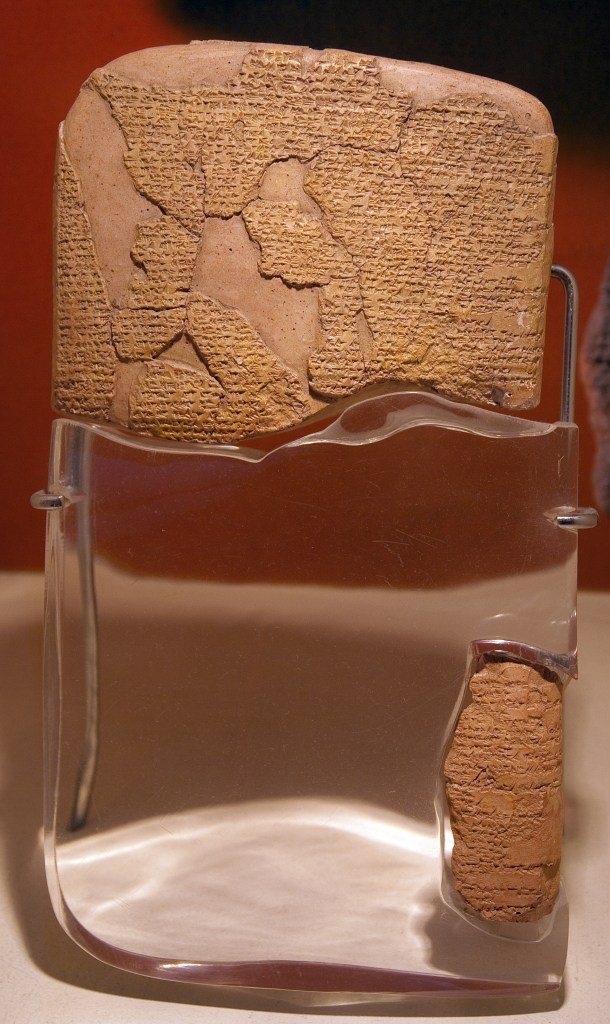
- The Egyptian–Hittite peace treaty, on display at the Istanbul Archaeology Museum
 Seirēnes
Leave a comment